English


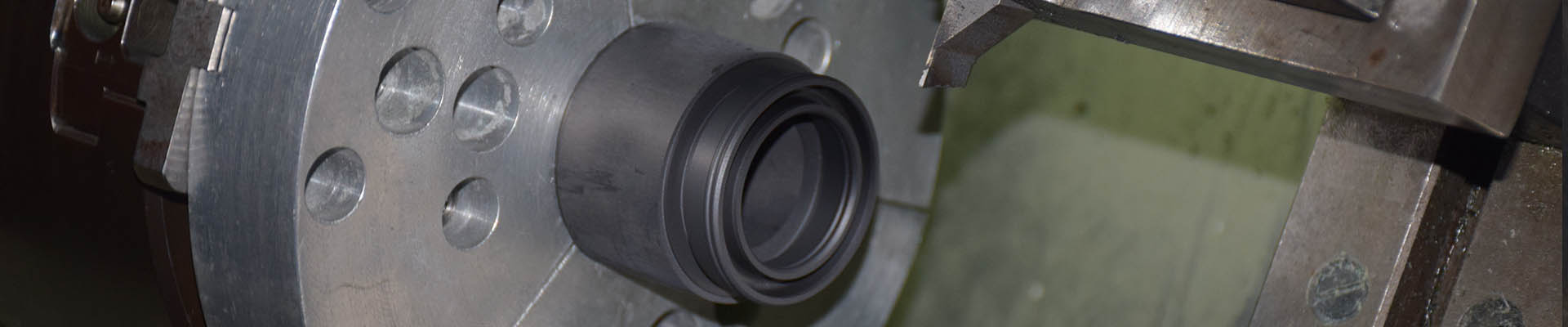
MEC Metal End Cap Seal vs P Seal: What's the Difference?
In oil and gas wellhead equipment, both MEC metal end cap seals and P seals are used for demanding static sealing applications. However, they differ in construction, sealing mechanisms, and the requirements they are designed to address.
The main difference is that an MEC seal combines an elastomer sealing element with bonded metal end caps, while a P seal uses an elastomer-based sealing element with backup components to resist extrusion. The right choice depends on the wellhead design, installation position, pressure rating, sealing surfaces, and operating conditions.
Neither design is automatically better for every application. Understanding their differences helps engineers and procurement teams specify a seal that matches the equipment rather than selecting by product name alone.
1. What Is the Difference Between an MEC Seal and a P Seal?
An MEC (Metal End Cap) seal is a customized elastomer-to-metal sealing assembly. The elastomer is bonded to two metal end caps, which provide mechanical support and help resist extrusion under high pressure.
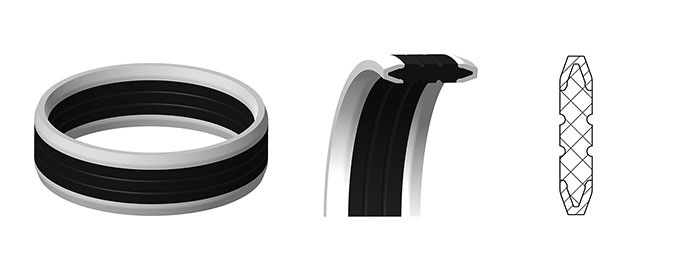
A P seal is a wellhead seal used in applications such as casing head and casing spool connections. Depending on the design, it incorporates an elastomer sealing element and backup components to help prevent extrusion. In the P seal design described by JST, the backup components may be mesh stainless steel or solid carbon steel, and the seal is energized by injected sealant.
Although both designs address high-pressure sealing challenges, their construction and installation requirements are different.
2. MEC Seal vs P Seal: Key Differences
|
Comparison |
MEC Metal End Cap Seal |
P Seal |
|
Basic construction |
Elastomer bonded to two metal end caps |
Elastomer sealing element with anti-extrusion backup components |
|
Main sealing approach |
Radially compressed, pressure-energized elastomer, supported by metal end caps |
Elastomer seal energized by injected sealant, according to the specified design |
|
Extrusion resistance |
Metal end caps provide mechanical support and help restrict extrusion |
Backup components help resist extrusion under pressure |
|
Metal components |
Bonded metal end caps form part of the sealing assembly |
Backup components may use mesh stainless steel or solid carbon steel |
|
Typical application focus |
High-pressure static sealing in wellhead, casing and tubing-related equipment |
Casing head and casing spool sealing applications, according to the equipment design |
|
Important selection factors |
End-cap geometry, elastomer, metal compatibility, bore condition and operating pressure |
Seal profile, backup configuration, sealant injection arrangement, groove dimensions and operating pressure |
The table describes typical design characteristics, not universal specifications for every manufacturer's product. Final selection must be based on the actual drawing and equipment requirements.
3. How Does the MEC Metal End Cap Design Work?
The MEC design combines the flexibility of an elastomer with the mechanical support of metal components.
During installation, the elastomer core is radially compressed to establish initial sealing contact. When system pressure is applied, the elastomer responds to the pressure and helps maintain contact with the mating surfaces.
The bonded metal end caps provide additional mechanical support and help resist extrusion into gaps. Depending on the design and mating hardware, the metal components can also contribute to metal-to-metal contact at the sealing interface.
This construction can be useful in high-pressure wellhead applications where the sealing bore may have surface imperfections or minor mechanical damage. However, the seal cannot compensate for every surface defect: bore condition, clearance, dimensions and installation requirements must still meet the specified limits.
JST's published MEC product information lists a working pressure of up to 15,000 PSI and a temperature range of -4°F to +392°F. These figures are product-level published limits, not a guarantee that every material combination can operate at both extremes simultaneously. The applicable rating must be confirmed for the selected configuration.
For more details, see JST's MEC Metal End Cap Seal product page.
4. How Does a P Seal Work?
A P seal is designed for specific wellhead sealing arrangements, particularly in casing head and casing spool applications.
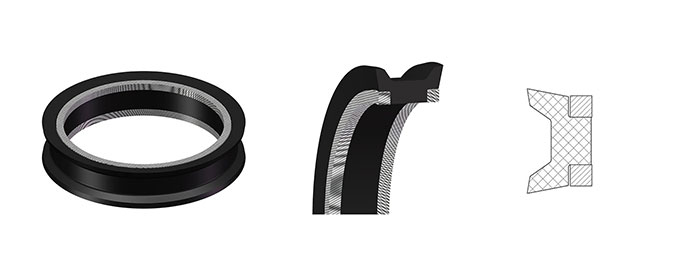
In the P seal design described by JST, the elastomer provides the sealing function, while backup components help control deformation and resist extrusion under pressure. The seal is energized by injecting sealant into the designated sealing area.
The backup components are important because high pressure can force elastomer into available clearances, potentially causing extrusion damage or seal failure. The exact performance depends on the seal geometry, backup construction, material properties and equipment tolerances.
P seals are not interchangeable with all other wellhead seal types. Their suitability depends on the intended installation location and the wellhead assembly's design.
See JST's wellhead P seal information for more about P seal applications.
5. Which Seal Is Better for High-Pressure Wellhead Applications?
There is no universal winner. Both MEC and P seals can be suitable for demanding wellhead conditions when designed and specified for the intended application.
An MEC seal may be worth evaluating when the design calls for a bonded elastomer-to-metal assembly, substantial extrusion resistance, and a pressure-energized elastomer core.
A P seal may be appropriate when the wellhead assembly is specifically designed for a P seal and uses its prescribed installation and sealant-injection arrangement.
The maximum pressure rating alone is not enough to make the decision. Two seals with similar pressure ratings may differ in installation dimensions, sealing interfaces, material compatibility and maintenance requirements.
Engineers should verify the following before making a selection:
For a broader overview of wellhead seal selection, including equipment interfaces, operating conditions, and application requirements, read our guide: How to Select a Casing Hanger Seal for Oil & Gas Wellheads?.
6. Can an MEC Seal Replace a P Seal?
Not as a direct substitution based on the product name alone.
MEC and P seals may serve related wellhead sealing functions, but differences in cross-section, dimensions, sealing interfaces, backup structure and installation method can prevent a direct replacement.
Before considering a substitution, compare the original seal drawing with the proposed replacement. Confirm the installation space, mating surfaces, pressure rating, elastomer compatibility, metal-component requirements and installation procedure.
For critical wellhead equipment, a substitution should be reviewed and approved by the equipment manufacturer or the responsible engineering team. If the original P seal relies on a particular sealant-injection arrangement, a proposed MEC seal must be assessed against the complete sealing system rather than the seal element alone.
7. What Materials Are Used for MEC and P Seals?
Material selection depends on the operating medium, temperature, pressure and required service life.
For MEC seals, JST lists elastomer options including NBR, HNBR and FKM, combined with metal components such as stainless steel. Other metal alloys may be considered for specific designs and service conditions.
For P seals, the elastomer and backup components must be selected according to the equipment design and the required operating conditions. Material selection should account for chemical compatibility, temperature resistance, decompression behavior and extrusion resistance where relevant.
For sour-gas service or other demanding oil and gas environments, do not rely on a generic material name alone. Request the specific compound designation, qualification evidence and compatibility information for the intended service.
8. What Information Is Needed to Select the Right Seal?
Whether you are evaluating an MEC seal, a P seal or a possible replacement, providing complete application information helps reduce specification errors and unnecessary redesign.
Before requesting a quotation, prepare:
If the original seal drawing is unavailable, equipment drawings, photographs with reliable dimensional references and the original part number may help the manufacturer identify the required design. They should not replace engineering verification where dimensions or ratings remain uncertain.
Frequently Asked Questions
What is the main difference between an MEC seal and a P seal?
An MEC seal uses an elastomer bonded to two metal end caps. A P seal uses an elastomer sealing element with backup components in a designated wellhead sealing arrangement. Their installation and sealing-system requirements differ.
Is an MEC seal suitable for API 6A wellhead equipment?
MEC seals are used in high-pressure oil and gas wellhead applications. Suitability for a particular API 6A assembly depends on the equipment design, dimensions, required ratings and applicable qualification requirements. Verify the specific product documentation rather than assuming compatibility from the standard alone.
Does an MEC seal always have a higher pressure rating than a P seal?
No. Pressure capability depends on the specific design, material, dimensions, extrusion clearance and qualification testing. Compare the ratings for the exact products and operating conditions.
Can a P seal be replaced without modifying the wellhead?
A replacement may be possible when the proposed seal matches the original design and equipment requirements. An MEC seal should not be assumed to fit or function as a direct replacement for a P seal without dimensional and engineering verification.
Which seal is better for sour-gas service?
Neither design is inherently better for every sour-gas application. The selected elastomer compound, metal materials, pressure and temperature limits, decompression resistance, and qualification evidence must all be evaluated for the actual service conditions.
Conclusion
MEC Metal End Cap Seals and P seals address demanding static sealing requirements in oil and gas wellhead equipment, but they use different construction approaches and may require different installation arrangements.
An MEC seal combines an elastomer core with bonded metal end caps for sealing flexibility and mechanical support. A P seal uses its specified elastomer and backup configuration within a designated wellhead sealing arrangement.
The best choice is the seal that matches the equipment interface, operating conditions, material requirements and qualification criteria—not simply the one with the higher advertised pressure rating.
Need help identifying the right wellhead seal? Share your equipment model, seal drawing or part number, working pressure, temperature and media with JST Seals. The engineering team can review the application requirements and help determine whether an MEC seal, a P seal or another wellhead sealing design is appropriate.
New Blog


For inquiries about our products or pricelist, please leave to us and we will be in touch within 24 hours.


 No. 1, Xinyu North Road, Ningxi Street, Zengcheng District, Guangzhou, China 511340
© Copyright: 2026 Guangzhou JST Seals Technology Co., Ltd. All Rights Reserved.
Friendly Links:
VonesealsScan to wechat