English


What Is the Role of the Centralizer in Drilling Operations?
When we talk about downhole drilling, the conversation often revolves around drill bits, mud motors, or blowout preventers. Yet, quietly working behind the scenes—often overlooked—is a small but mighty tool: the centralizer.
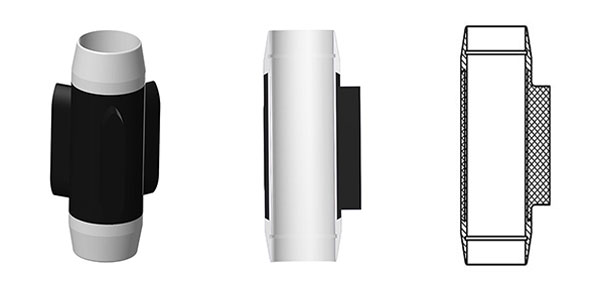
If the drill string is the "backbone" of the drilling operation, the centralizer is the "chiropractor" that keeps everything aligned. But what exactly does it do, and why is it so critical? Let's take a closer look.
The Core Mission: Keeping Things Centered
At its most fundamental level, a centralizer does exactly what its name suggests—it centers the pipe or tool string within the wellbore or casing.
Why does that matter?
In a perfectly vertical well, gravity naturally keeps the pipe hanging straight down. But in reality, most wells are directional or horizontal, drilled through complex geological formations. Even in vertical wells, minor deviations, ledges, or "doglegs" (sharp bends in the well path) can cause the pipe to tilt and touch the borehole wall.
When the pipe is off-center, multiple problems arise:
The centralizer prevents these issues by physically pushing the pipe back to the center of the wellbore, ensuring uniform annular clearance around the entire circumference.
Three Critical Roles of the Centralizer in Drilling Operations
1. Enabling Effective Zonal Isolation (Packers)
One of the most important jobs in drilling and completion is zonal isolation—preventing fluids from one formation from migrating into another. This is achieved using packers, which feature a rubber element (the "packer element") that expands to seal the annulus between the tubing and the casing.
Here’s the challenge: if the tubing is off-center when the packer is set, the packer element expands unevenly. One side compresses more than the other, creating a leak path for high-pressure oil, gas, or water.
Centralizers ensure that the packer is perfectly aligned with the casing wall before setting, so the rubber element can expand symmetrically and achieve a full-circumference, reliable seal.
2. Steering the Wellbore Trajectory (Drill String Stabilizers)
In directional drilling, centralizers—often called stabilizers in this context—are placed near the drill bit to guide the bottom-hole assembly (BHA).
By controlling the bending moment at the drill bit, stabilizers help the drilling team:
Maintain the desired build, hold, or drop angle
Prevent unwanted deviation from the planned trajectory
Reduce bit vibrations and stick-slip phenomena, which can damage both the bit and the BHA components
In short, stabilizers act as the steering wheel of the drill string, giving the driller more control over the wellpath.
3. Protecting Tubing and Sucker Rods from "Eccentric Wear"
During production, sucker rods reciprocate up and down inside the production tubing to pump oil to the surface. In deviated wells, these rods tend to rub against the tubing wall as they move—a condition known as eccentric wear or rod-on-tube wear.
Over time, this friction can:
Wear through the tubing wall, causing leaks
Fatigue and break the sucker rods
Lead to costly workover operations
Rod centralizers (or rod guides) are installed along the sucker rod string. They are slightly larger in diameter than the rod couplings, so they contact the tubing wall first—wearing themselves down instead of the expensive tubing. Some advanced designs even incorporate rolling elements to convert sliding friction into rolling friction, significantly reducing drag and extending service life.
Beyond Mechanical Alignment: The Material Choice Matters
For centralizers that contact the casing or borehole wall, material selection is just as critical as the structural design. Centralizers used in harsh downhole environments often incorporate high-performance engineering plastics or elastomers, such as:
PEEK (Polyether Ether Ketone) – excellent wear resistance and high-temperature stability
PA (Polyamide/Nylon) – good toughness and chemical resistance
HNBR or FKM rubber inserts – for friction reduction and vibration damping in dynamic applications
As a manufacturer of high-quality rubber and plastic sealing and guiding components, we understand that the right material can mean the difference between a centralizer that lasts one run and one that survives multiple wells.
Conclusion: Small Part, Huge Impact
The centralizer may be one of the smallest components on the drill string, but its contribution to drilling efficiency, wellbore integrity, and production longevity is enormous.
At our company, we take this "small part" seriously. From precision-molded polymer centralizers to custom-engineered elastomeric guides, we are committed to delivering solutions that keep your wells centered—and your operations running smoothly.
Interested in learning more about our centralizer solutions or custom downhole components? Contact us today for a technical consultation or sample request.
New Blog


For inquiries about our products or pricelist, please leave to us and we will be in touch within 24 hours.


 No. 1, Xinyu North Road, Ningxi Street, Zengcheng District, Guangzhou, China 511340
© Copyright: 2026 Guangzhou JST Seals Technology Co., Ltd. All Rights Reserved.
Friendly Links:
VonesealsScan to wechat